Purpose of Air Testing
When we talk about air testing, we’re referring to a crucial process designed to ensure that our buildings function efficiently and comply with regulations. At its core, air testing gauges how airtight a building is. This testing is about more than just ensuring comfort; it’s a step towards preventing energy loss and reducing the impact on our environment. As energy costs continue to rise and environmental concerns mount, it’s more important than ever to make sure our buildings don’t waste this precious resource.
At Ratio Seven, we understand the importance of air testing, not only as a check that everything is in order but also as a tool to improve the way we use energy in our buildings.
The Process of an Air Test
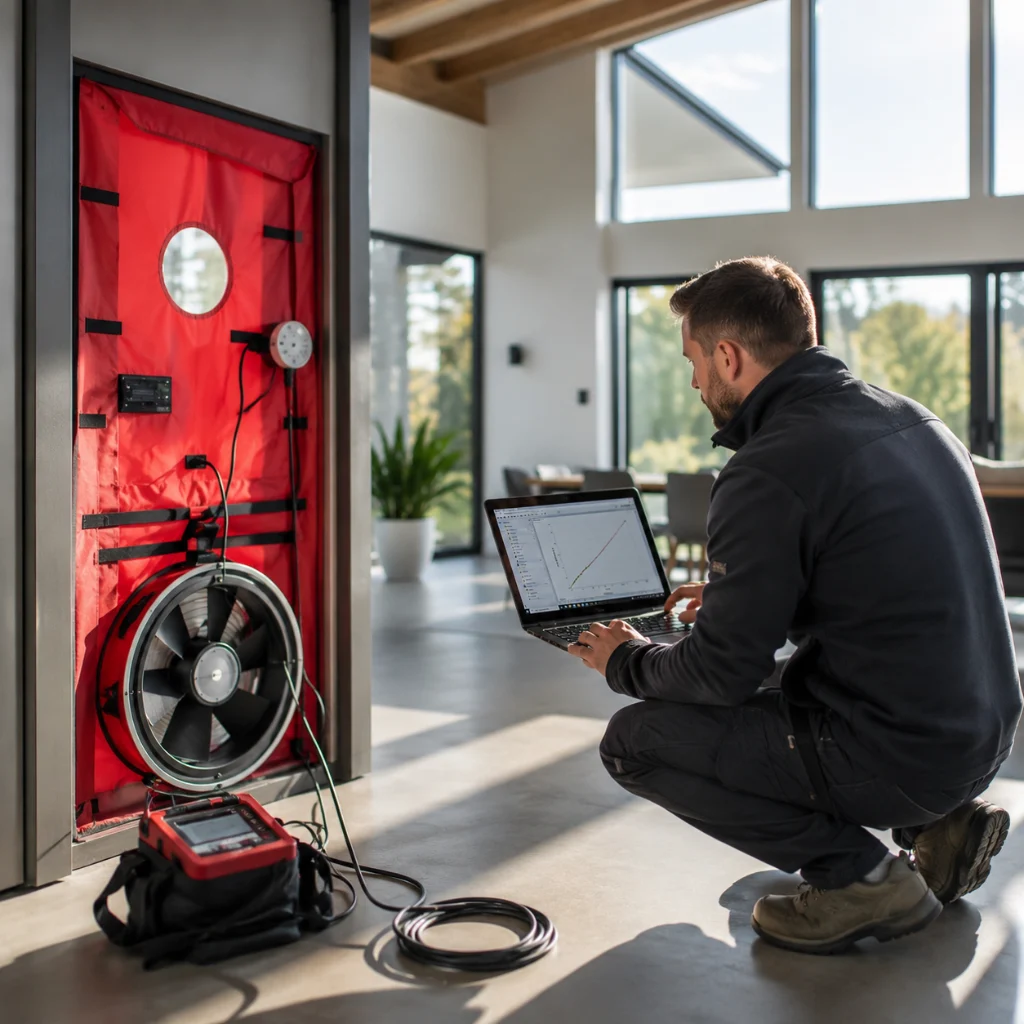
Conducting an air test, often known as a blower door test, involves using specific equipment to measure the amount of air that escapes a building. The procedure is straightforward and involves setting up a blower door machine connected to a fan. This fan is placed in an exterior doorway and calibrated to monitor pressure differences across the building envelope. This method determines energy efficiency by pinpointing areas where air is seeping through.
Once the blower door test is in place, the fan pulls air out of the building, and we measure the air exchange rates. These rates give us a clear picture of how much air is being lost and where improvements are needed.
Results of an Air Test
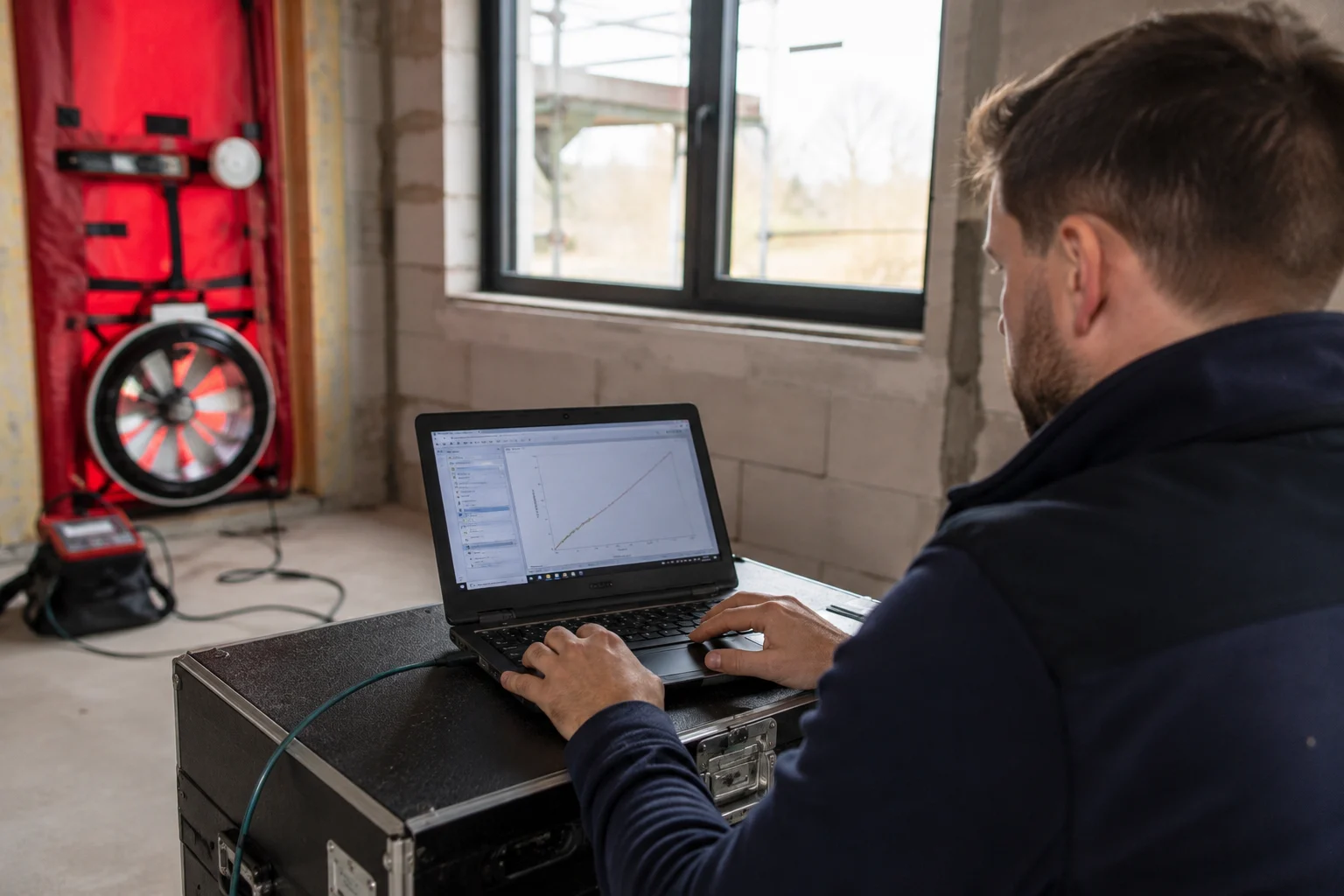
Once the air test is complete, the real work begins. We analyse the data to get insights into the building’s performance. Identifying where air is leaking is a critical step. This allows us to zero in on specific areas that require attention.
Results from this test are not mere numbers; they’re actionable insights that can enhance a building’s performance. By tackling the areas where air escapes, we don’t just make a building compliant with standards—we make it more comfortable and energy-efficient.
Tools and Technology in Air Testing
The modern tools used in air testing are sophisticated yet easy to understand. The most common tool is the blower door, a powerful fan mounted into a frame that fits snugly into an exterior door. Additionally, diagnostic tools help find leaks with pinpoint accuracy. Techniques like using smoke pencils or thermal cameras can detect even the smallest leaks.
These technologies are essential for conducting accurate tests and achieving precise results. They ensure that any air leaks are identified and can be dealt with effectively.
Building Regulations Compliance and Air Testing
Understanding how your building measures up to local and national building regulations is crucial. Air testing provides the evidence needed to demonstrate compliance. Many regions have strict airtightness standards for new buildings. Compliance is key not just because it avoids penalties but because it ensures buildings are sustainable and energy-efficient.
In our experience at Ratio Seven, passing these tests often requires a bit of tweaking. If we know where the weak points are, we have a better chance of staying on the safe side of regulations.
What Happens After an Air Test Is Completed?
Interpreting Air Test Results
After we have completed the air test, interpreting the results becomes the top priority. Data analysis works like a roadmap, guiding us on how to enhance the airtightness of a building. Knowing which parts of the property are weak allows for targeted improvements and better overall performance.
Recommendations for Improvement
From the insights gained, we can provide specific recommendations. This might involve sealing obvious leaks, upgrading insulation, or considering structural fixes. With these recommendations, property owners and builders can make informed decisions that result in energy savings and a lower carbon footprint.
Documentation and Reporting
Proper documentation is critical after any air test. We ensure that findings are reported accurately to stakeholders, such as property owners, builders, and regulatory bodies. This transparency means everyone involved knows what needs to happen next to maintain or improve performance.
For a detailed look at what documentation you should receive, you can find more information on airtightness test documentation.
Benefits of Regular Air Testing
Regular air testing should become part of a routine maintenance check. This process ensures ongoing compliance with building regulations, like SAP calculations and airtightness requirements. In doing so, it can help prevent unnecessary energy loss and reduce energy bills over time.
For more on this topic, our page on new build compliance testing outlines how regular testing can help avoid costly delays in your building projects.
FAQs
Why is airtightness important?
Airtightness prevents unwanted airflow, ensuring energy efficiency and compliance with building standards. Learn more about its role in comfortable living spaces.
How does air testing relate to ventilation testing?
Ventilation testing ensures air quality within the building. While air testing gauges losses, ventilation testing measures fresh air entry. You can delve into the details of ventilation testing and how it complements airtightness.
When should I conduct an air test?
An air test should be conducted at various stages of building development, especially for new builds. Ratio Seven’s new build air pressure test page provides an outline for the best times to schedule testing.
Invest in Better Building Performance with Regular Air Testing
The long-term benefits of conducting air tests are clear. They lead to improved energy efficiency, lower energy bills, and a reduced environmental impact. By integrating air testing into regular building maintenance, you ensure that your building remains up to code and optimal in performance. Compliance is not a one-time job; it is a lifelong commitment to building better environments.
At Ratio Seven, we encourage you to embrace regular air testing. Improved airtightness yields benefits not just today, but well into the future.