Why Airtightness Testing Matters for Small Developers and Self-Build Projects
Meeting the current requirements in the UK building sector isn’t just about structure and safety anymore. Since energy efficiency rules became stricter under the updated Part L Building Regulations, airtightness testing now plays a key part in whether a house passes or fails when it comes to Building Control. Whether you’re a small developer trying to stick to deadlines or a self-builder managing every penny and detail of your dream home, understanding and planning for airtightness testing can save you stress and money.
Homes today need to do more than just look good; they must perform well, use less energy, and provide lasting comfort. Small-scale residential developers and individual builders are stepping up to meet these goals, especially as people become more aware of rising energy bills and carbon footprints.
At Ratio Seven, we regularly work with small developers and self-builders across the UK. We see firsthand how early planning and the right advice make meeting airtightness standards far easier than people expect.
What is Airtightness and Why Is It Tested?
Airtightness refers to how much unwanted air leaks into or escapes from a building. Uncontrolled draughts can make heating systems work harder and increase bills. Every small gap, whether around windows, pipes or the roofline, allows warm indoor air to escape and cold air to sneak in.
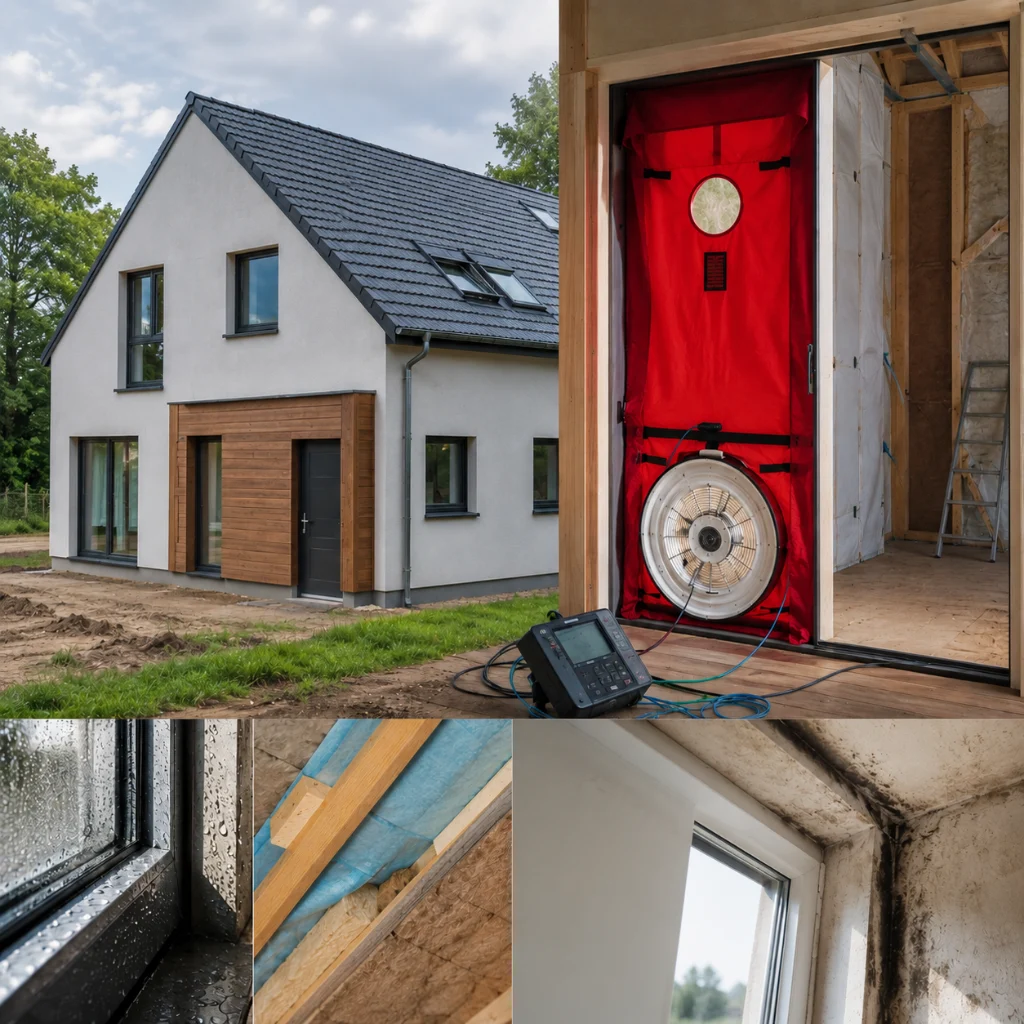
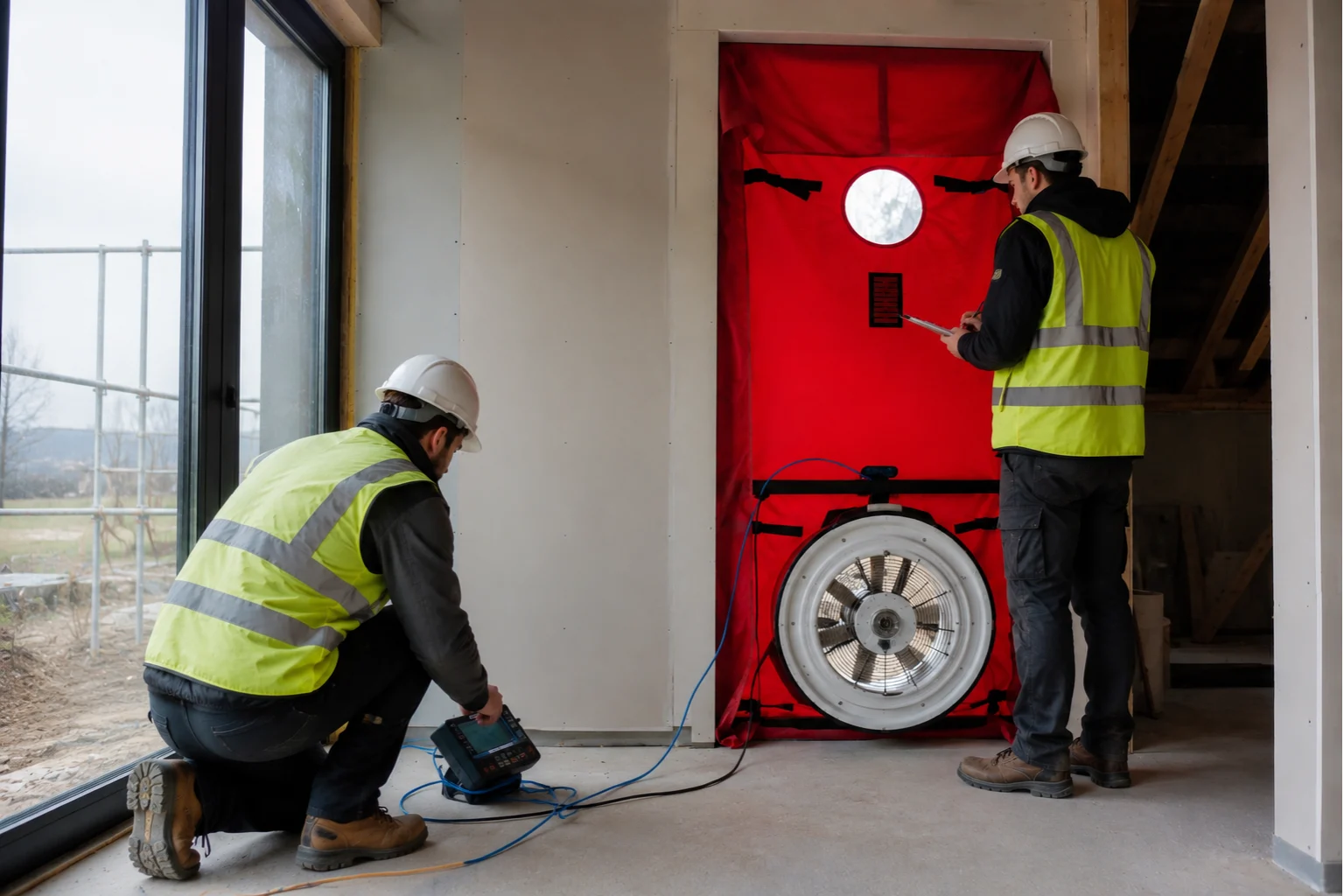
That’s where airtightness testing comes in. It checks how well the building envelope keeps air from leaking where it shouldn’t. A blower door test is the most common method, using a specialised fan to pressurise or depressurise the house while measuring how much air escapes through unsealed areas.
Keeping warm air inside impacts energy use, and not just from a cost point of view. It’s also about improving your home’s rating through SAP calculations. These are the energy performance scores required for both the Energy Performance Certificate and final sign-off. You can learn more about these calculations at our SAP calculations page: SAP Calculations.
Not only does airtightness affect heating efficiency, but it also influences comfort levels. A well-sealed house avoids draughts and holds warmth. But it’s important to remember, sealing a house too tightly without letting fresh air flow in can cause problems too, like condensation and stale air. This is why pairing airtight construction with controlled mechanical ventilation, such as MVHR systems, makes sense for new energy-efficient homes.
How Airtightness Testing Fits into the Self-Build Process
Self-build homes are rising in popularity across the UK. People want something special, better suited to how they live and what they can afford. When you’re building your own home, you’re not just the project manager, you’re often the decision-maker, the coordinator and the quality controller.
Among all the decisions you’ll face, airtightness can be one of the most overlooked. Many assume it’s something to think about right at the end. That’s a common mistake.
The reality is, airtightness should be planned from the design phase. Every detail matters. That includes picking materials that form a proper air barrier, planning joints carefully, and making sure each trade on site understands how their work could affect air sealing.
One of the best ways to stay in control is by arranging a pre-test or early-stage airtightness test. Doing so means you catch potential problems before they’re hidden behind plasterboard. At Ratio Seven, we often find that early intervention stops issues from snowballing later, especially where several different trades have worked on the same area.
Understanding the Airtightness Testing Process
When and How Airtightness Testing Happens
The standard practice is to test once the building envelope is complete, usually towards the end of the build, before final finishes go in. This includes fitting all windows and doors, sealing service penetrations, and covering over obvious draught points.
In some cases, especially with smaller teams or custom builds, phasing makes sense, carrying out an interim test to check high-risk areas before everything is sealed up.
How the Blower Door Test Works
A rectangular panel is placed into an external doorway. A fan inside blows air in or out of the house, changing the pressure. Sensors then measure the difference in pressure inside and outside, matching that with how quickly air leaks or escapes. The result is usually reported in either air changes per hour (ACH) or cubic metres per hour per square metre of envelope area (m³/hr/m²).
You can find more information about the testing process and common questions at our Air Testing FAQs.
Getting Ready for the Test
To make sure a test gives fair results, you need to prepare the building. That means covering or sealing intentional openings like chimneys and vents, and making sure windows and doors close fully. On unique self-builds, this step is even more important because design choices might not follow any standard form.
An installer might, for example, forget to seal around a new wood-burning flue or a duct for a cooker hood. These things add up quickly and could cause the test result to fall below the required level.
Common Air Leakage Zones and How to Spot Them
Some areas are simply more likely to leak. In our work across the UK.
We regularly find gaps in:
- service entry points where cables or pipes enter the wall
- loft hatches or ceiling penetrations
- window and door junctions
- poorly sealed sockets on external walls
- unsealed skirting boards and floor junctions
The leaks usually stem from haste or miscommunication between different trades. For example, a plumber may drill through an airtight membrane and leave the hole unsealed, unaware of its importance.
Solutions That Work
Using the right materials makes all the difference. That includes airtight tapes, grommets for cable and pipe penetrations, airtight membranes for ceilings and walls, and caulk or foam for larger joints.
We always advise keeping work clean and methodical, and don’t cover gaps because they will come back to haunt during testing. Good detailing, checked at each stage, helps prevent headaches later.
Coordination between trades is vital. If a carpenter seals a frame but then the electrician cuts through it without resealing, all the early care is wasted. We often see this on self-build projects where separate trades aren’t always on-site at the same time.
Meeting Part L Building Regulations Through Airtightness Testing
Under the current Part L Building Regulations, every new home must meet certain energy performance criteria. This involves SAP calculations, effective insulation and, critically, airtight construction.
Airtightness testing is one way Building Control checks whether new homes genuinely meet the criteria set out in Part L. Without a test result from an accredited assessor, you will not be able to complete your Standard Assessment Procedure report or receive your final Energy Performance Certificate.
Our team at Ratio Seven is fully qualified to carry out airtightness testing and SAP calculations for your build, keeping you compliant from start to finish.
Why Testing Helps You Beyond Compliance
Getting a test done is about more than ticking boxes. When your home or development performs well during its airtightness test, you benefit in several real ways.
- Lower heating bills: You don’t lose heat through hidden cracks or unwanted draughts.
- Comfortable rooms: Without cold air sneaking in around windows or wall outlets, rooms stay warmer and more even.
- Less condensation: Airtightness helps reduce cold bridge effects that can lead to damp patches and mould.
- Better SAP and EPC results: A good airtightness score directly boosts your SAP ratings, helping achieve stricter targets.
For budget-conscious builders or developers working on small plots, these savings are long-term and worth tracking. A little extra care during construction results in big advantages over time.
Let’s Make Airtightness Simple
Whether you’re a solo self-builder or managing a bespoke project, airtightness doesn’t need to be overwhelming. The trick is planning early, getting the building sequence right and working with those who test homes every week.
Our experienced team at Ratio Seven is here to help small developers and self-builders stay on track. We carry out air-tightness testing across the UK and support your wider project with SAP assessments, expert advice and reliable reporting.
If you’re getting ready to build or just have a few questions, get in touch via our contact page. We’ll guide you through everything you need to get your air test done right the first time.
Quick Wrap-Up and What You Can Do Next
Airtightness testing isn’t just a late-stage requirement. It’s something that affects comfort, running costs and compliance under Part L Building Regulations.
If you’re a small developer or self-builder, the right approach is to plan from the beginning with airtightness in mind. Check key areas early, talk with your trades, and consider a checkpoint test if you want peace of mind before finishing plasterwork.
Proper airtightness improves the feel of your home, saves you money and helps the environment. It’s not just about passing a test, it’s about building something that works the way you want it to, every day.
If you’re ready to sort out testing on your current project or want to know more about the airtightness requirements, reach out to Ratio Seven today. We’re happy to help.