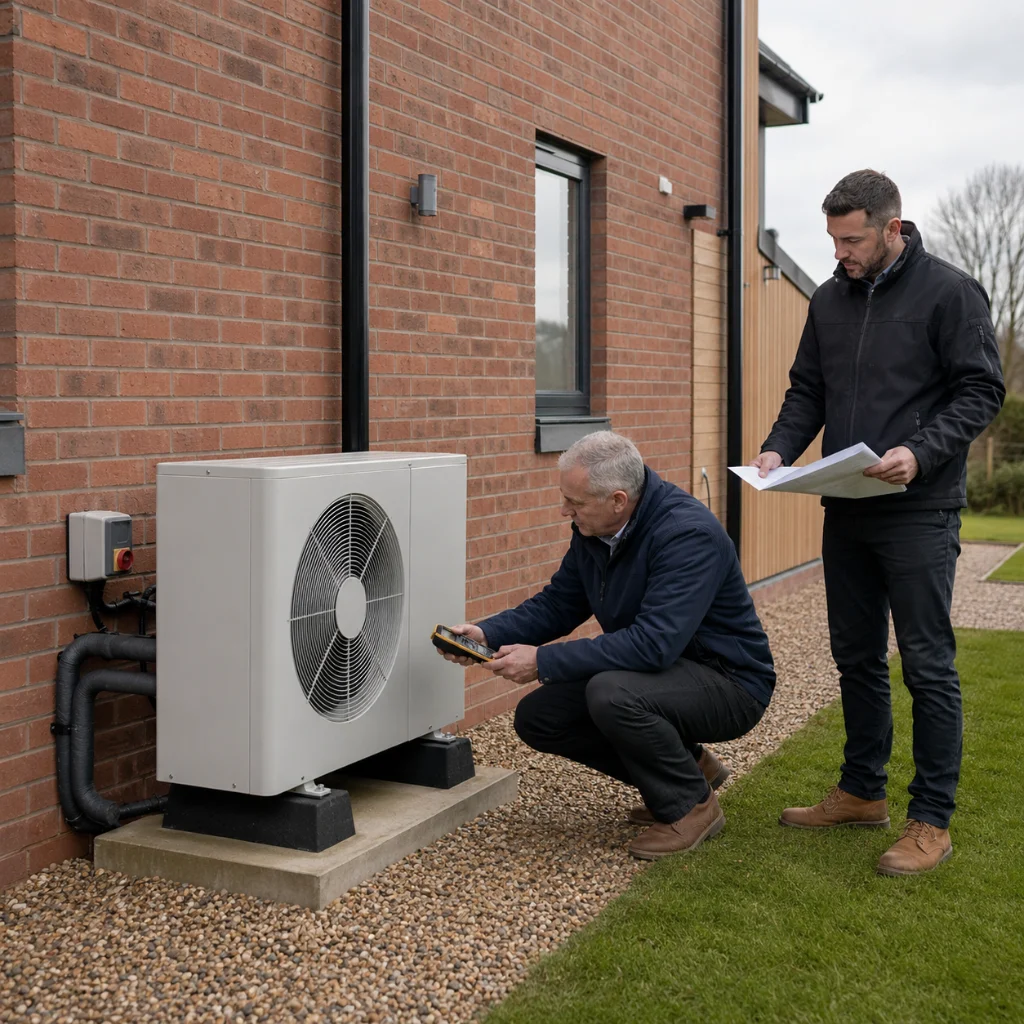
Heat pumps are becoming a common sight on new-build homes across the UK, and with that shift comes a whole new set of questions about how they affect the paperwork behind the scenes. Getting a heat pump installed is one thing, but proving it meets the rules is another matter entirely. In this piece, we look at how heat pumps fit into building compliance, what heat pump building regulations compliance actually involves, and why getting your calculations right from the start saves a huge amount of stress later on.
Why building compliance matters more with heat pumps
Heat pumps work differently to traditional gas boilers, and that difference has knock-on effects for how a building is assessed. They run at lower flow temperatures, they rely heavily on good insulation, and they need the rest of the house to be working with them rather than against them. This means building compliance checks have to look at the whole picture, not just the heating system on its own.
When a heat pump is fitted into a new build, the assessor needs to check that the walls, roof, windows and airtightness are all up to scratch. If they are not, the heat pump will struggle to keep the house warm, and the building might fail to meet the standards set out in the regulations. This is why so many developers now bring in outside help early, rather than waiting until problems show up on site. Our new build consultancy service exists precisely because these checks work best when they happen at the design stage, not after the walls are already up.
How heat pump building regulations compliance actually works
Getting a heat pump signed off is not simply a case of fitting it and switching it on. There is a formal process behind it, and it starts with something called a SAP calculation. SAP stands for Standard Assessment Procedure, and it is the method used to work out how energy efficient a home is expected to be. Every new build in England and Wales needs one of these before building control will pass it.
Heat pumps change the maths quite a bit compared to a gas boiler. The system needs accurate figures on the size of the property, the type of heat pump, the insulation levels and the ventilation strategy. Get any of these wrong and the whole calculation can come back showing the house fails to meet the target. That is why understanding the impact of renewable energy systems on SAP calculations is so useful for anyone planning a heat pump installation. It is not just a box-ticking exercise; it genuinely shapes how the rest of the building needs to be designed.
Alongside SAP, there are also separate checks on air tightness, thermal bridging and ventilation, all of which interact with how well the heat pump performs. Missing any of these can mean a project gets flagged during new build compliance testing, which nobody wants to deal with once the build is nearly finished.
What the current rules actually say
The rules that cover all of this sit within Part L of the building regulations, which deals with the conservation of fuel and power. If you are new to this area, our guide to Part L building regulations is a good place to start, since it explains the basic structure of what is required and why it exists in the first place.
Part L was significantly updated in 2022, and those changes had a direct effect on how heat pumps are treated within compliance checks. The updated version raised the bar for fabric performance and pushed low carbon heating systems, including heat pumps, much further up the agenda. You can read more about exactly what changed in our breakdown of the Part L building regulations 2022 update, which covers the tighter targets that developers now need to hit.
These changes did not appear overnight either. The wider shift in new building regulations from 2022 onwards set the tone for where things are heading, with the Future Homes Standard due to push things even further within the next few years. Anyone working on new builds now needs to think ahead, because what passes today may not be enough in a couple of years.
Common mistakes that cause heat pump projects to fail compliance
We see a handful of mistakes come up again and again on projects involving heat pumps. The first is undersizing the system. A heat pump that is too small for the property will not be able to keep it warm enough during cold spells, and this often shows up clearly in the SAP results before the building is even finished.
The second common issue is poor insulation planning. Heat pumps rely on the building holding onto heat far more than a traditional boiler system does, so if the fabric of the building is not up to standard, the whole system underperforms. This is one of the main reasons SAP calculations flag issues so often on heat pump projects, and it links directly back to why getting SAP calculations for UK residential compliance right at the design stage matters so much.
The third mistake is leaving the compliance checks until too late. Some developers still treat SAP calculations and compliance testing as a final step before sign-off, rather than something that should shape decisions from the start. By the time problems are found this way, changing the insulation or heating system design can be expensive and slow. Bringing in support earlier avoids most of these headaches entirely.
Weighing up the pros and cons for developers
Heat pumps are not a simple win in every situation, and it helps to be honest about that. They cost more upfront than gas boilers, and they need a well-insulated building to work properly. On the other hand, they produce lower running costs over time, they fit with where government policy is heading, and they help new builds meet the tougher carbon targets that keep getting introduced.
We go into much more depth on this in our article on the pros and cons of air source heat pumps, which is worth reading if you are trying to decide whether a heat pump suits a particular project. The right choice often comes down to the specific site, the budget, and how the rest of the building is being designed.
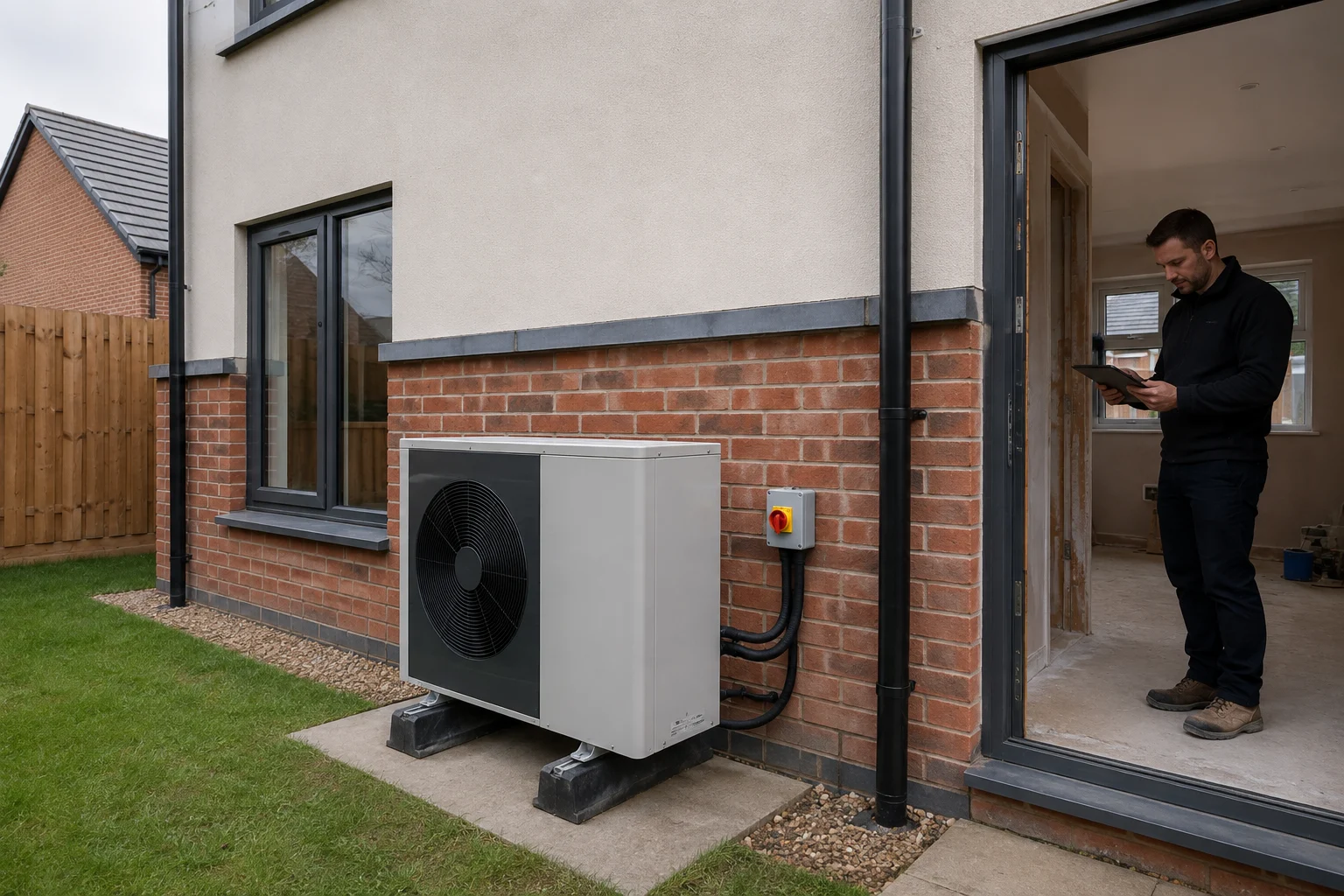
FAQs
Do all new build homes need a heat pump to meet building compliance?
Not yet, though the direction of travel is clear. Current rules do not force every new home to have a heat pump, but the tighter carbon targets in the updated Part L regulations make heat pumps a much easier route to meeting the standard compared with a gas boiler.
What happens if a SAP calculation shows a heat pump project will not pass?
This usually means changes are needed somewhere in the design, such as better insulation, improved airtightness, or a larger heat pump. Catching this early through proper calculations means changes can be made on paper rather than on site, which saves time and money.
How early should compliance checks start on a heat pump project?
As early as possible, ideally at the design stage before construction begins. Checking SAP figures, insulation plans and heat pump sizing before work starts on site gives far more room to fix issues without delaying the build.
Can an older house be brought up to the same standard as a new build with a heat pump?
It is possible, but it usually needs extra work on insulation and airtightness first, since older properties were not designed with heat pumps in mind. A proper assessment will show what upgrades are needed before the heat pump goes in.
Getting heat pump building regulations compliance right takes more than fitting the correct equipment. It means thinking about insulation, ventilation, SAP calculations and the wider requirements of Part L from the very start of a project, rather than treating compliance as an afterthought. Building compliance is not something to fear, but it does reward those who plan properly and ask the right questions early.
If you are working on a new build with a heat pump and want to make sure everything is on track from day one, our team at Ratio Seven is ready to help you work through the details and avoid costly surprises later on.