Understanding Airtightness Testing
We address the common concerns regarding airtightness testing in buildings. Let’s look into what this process involves and why it’s essential for making homes more energy-efficient and eco-friendly. Airtightness testing measures how much air leaks out of a building. This step is vital for improving energy efficiency, reducing waste, and complying with UK building regulations.
By understanding the actual procedure and how it affects buildings, we aim to dispel misconceptions that airtightness testing is either messy or disruptive. After all, when done properly, it’s a harmless part of building management.
Misconceptions About Airtightness Testing
The thought of having a team inspect your building’s nooks and crannies might evoke fears that the process will be intrusive or messy. Many people mistakenly believe that airtightness testing involves creating messes by leaving holes or altering the structure. The great news is that these concerns are largely unfounded due to the streamlined process of testing.
At Ratio Seven, we often hear worries that have more to do with misinformation than with the reality of air testing procedures. When airtightness testing is conducted, it utilises very specific tools and methods to ensure that the process is smooth and efficient.
Process of Airtightness Testing
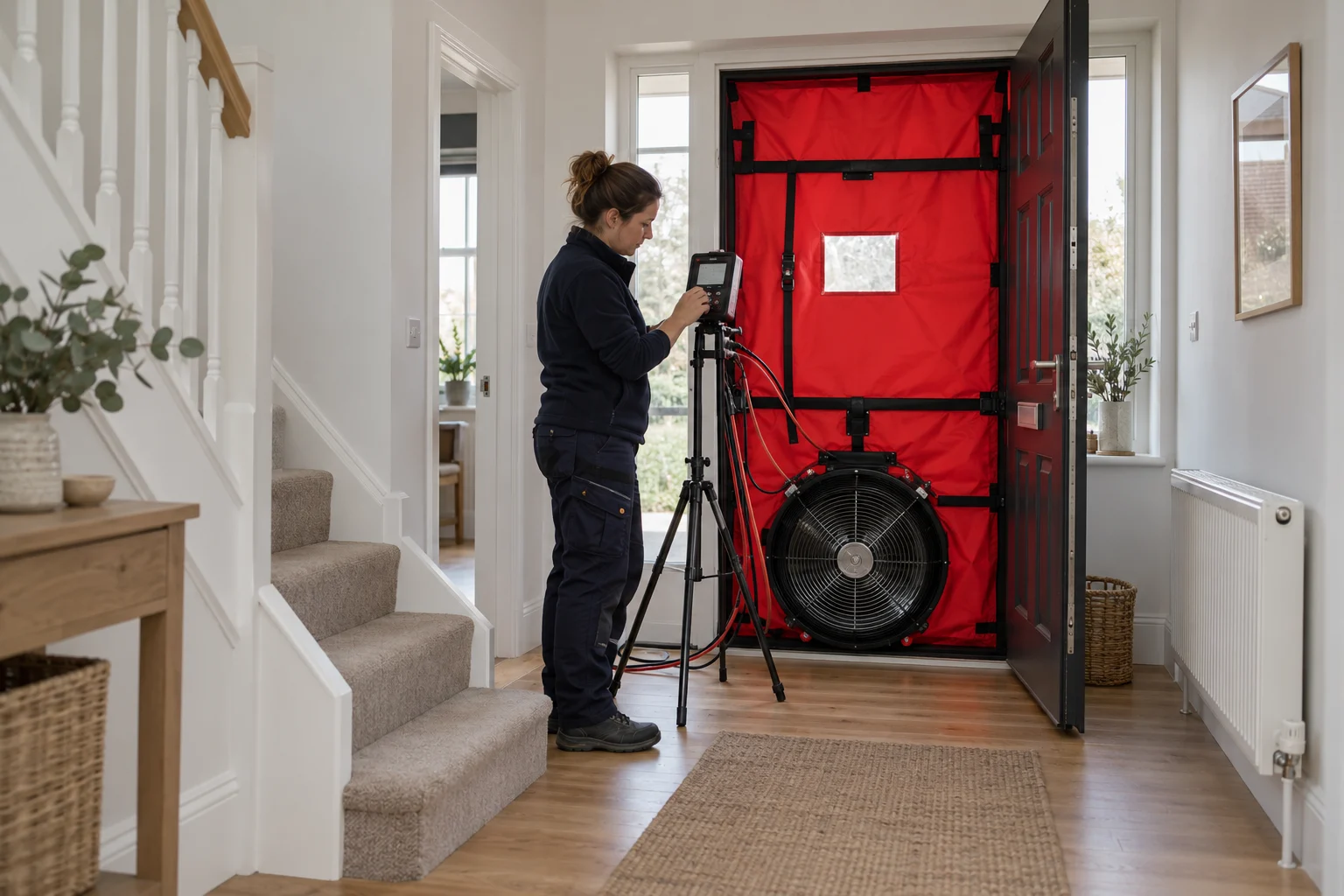
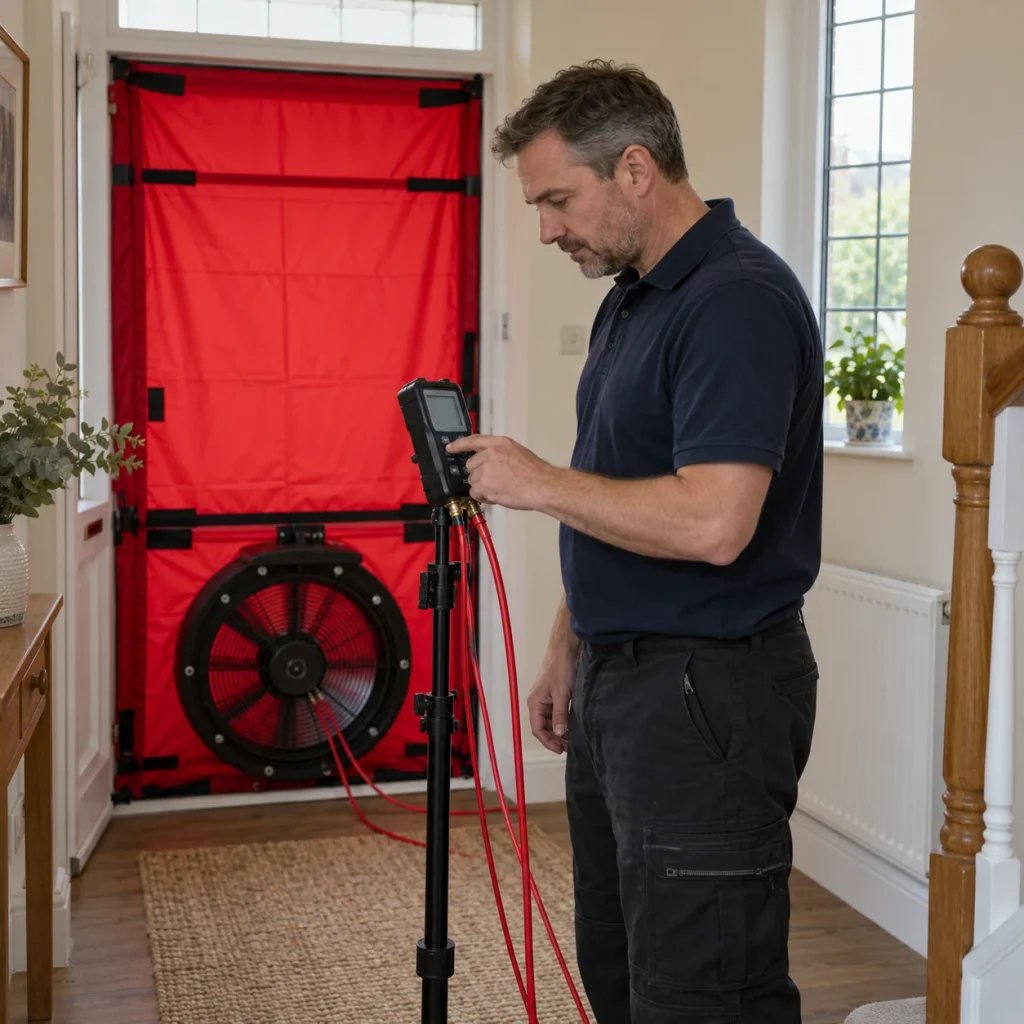
When we speak of airtightness testing, we refer to a specific assessment that helps determine how airtight your building is. This process typically involves using a piece of equipment known as a “blower door” that fits snugly into an external doorway. The blower door fan then either pulls air out or pushes air into the building to create a pressure difference. This helps measure the rate of air leakage.
At Ratio Seven, we manage the entire procedure so that there’s no need for anyone to make structural adjustments or endure any inconvenience. Contrary to popular belief, it neither involves major disruptions nor leaves any mess behind. The equipment is set up efficiently and removed straightforwardly, ensuring minimal disturbance to the building or its occupants. You can read more about the process in our air testing FAQs.
Factors Influencing the Outcome of the Test
Various factors affect the airtightness test outcome, such as the build quality, materials used, and recent refurbishments. Even factors like the weather might play a small role in the test results.
For any new build, the quality of construction will have a significant impact on the test results. Understanding this helps put any potential test results into context. Old buildings undergoing refurbishment might also affect airtightness due to deterioration over time.
Precautions and Preparation
Preparation for airtightness testing is not cumbersome. It’s surprisingly straightforward and manageable. Ensuring that doors and windows are closed properly is one of the main preparatory steps.
In preparation, take these simple steps: ensure no external doors or windows are open, check for any unnecessary openings, and coordinate with the team conducting the test. These tasks help ensure that the process goes smoothly with fewer hitches.
For a more detailed guide, you can visit our tips for new build compliance testing to avoid delays, which helps ensure you’re well-prepared and can help speed up the procedural aspects.
Benefits of Airtightness Testing
Enhancing Energy Efficiency
One significant advantage of airtightness testing is the noticeable improvement in energy efficiency. By understanding where air leaks occur, you’ll find it easier to address those issues, resulting in lowered energy costs.
Buildings that are inadequately sealed tend to waste a lot of energy on heating or cooling. By opting for airtightness testing, you’re not only contributing positively to your wallet but also making a broader impact by helping reduce carbon emissions.
For a deeper comprehension of the role of airtightness in achieving comfortable living spaces, visit our insights here: the role of airtightness in creating comfortable living spaces.
Achieving Regulatory Compliance
Meeting building regulations is often cited as one of the major reasons to conduct airtightness testing. Many governing bodies require these tests for new builds to ensure that they meet specified environmental standards.
Knowing that you need this test to pass regulatory standards gives peace of mind that your building is not only compliant but also structurally sound in terms of energy conservation and airtightness.
The Relationship Between SAP Calculations and Airtightness Testing
SAP (Standard Assessment Procedure) calculations play an essential role in determining the overall energy efficiency rating of a building. Airtightness testing contributes valuable data to these calculations, enhancing their accuracy.
The synergy between SAP calculations and airtightness testing is vital for achieving a holistic understanding of a building’s energy profile. By providing accurate insights into air leakage, effective measures can be taken to improve a building’s energy efficiency. Explore the importance of SAP calculations in airtightness for more in-depth knowledge.
Conclusion: Embracing Airtightness Testing with Confidence
The concerns over airtightness testing being messy or disruptive are unfounded. With effective preparation and the right team, the entire process is seamless, non-intrusive, and bears significant benefits such as improving energy efficiency, reducing costs, and ensuring compliance with building regulations.
We at Ratio Seven encourage building owners and managers to consider airtightness testing not as an ordeal but as a beneficial procedure conducive to maintaining building management and environmental responsibility.
By going the extra mile in preparation and working with experienced teams, airtightness testing can be a straightforward, rewarding step towards achieving a greener, more cost-effective building.
For further questions on airtightness testing, visit our comprehensive new build air pressure test guide that delves deeper into specifics. We look forward to helping you make your buildings as energy-efficient and airtight as possible!
FAQs
- Is air tightness testing disruptive?
- No, the procedure involves specialised equipment and is performed unobtrusively with minimal disturbance to those in the building.
- How long does airtightness testing take?
- Typically, the testing procedure itself can take a few hours, depending on the building size and complexity.
- Do we need to prepare the site in any special way?
- Just ensure doors and windows are closed properly. Straightforward checks are usually sufficient for preparation.
- What documentation do we receive after an airtightness test?
- You’ll receive a comprehensive report detailing the test results and any recommendations. Visit this link to learn more.
Reach out to Ratio Seven to ease any lingering doubts. We’re here to ensure your airtightness projects are conducted smoothly and efficiently!