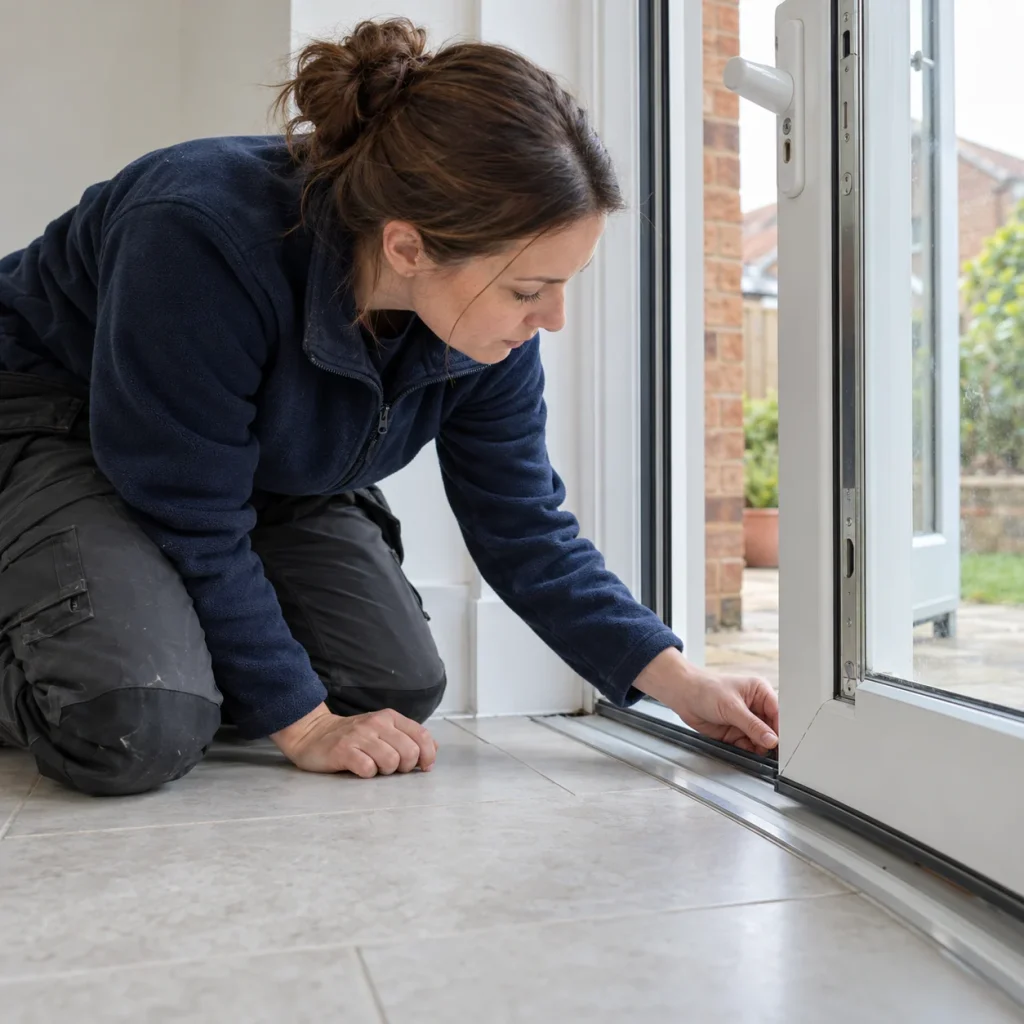
Doors affect air tightness test results more than most people expect. A door looks solid, but it is a moving part set into a fixed wall, and every edge of it is a place where air can slip through. At Ratio Seven we see this on site all the time, so we want to explain what is going on and how to put it right.
How doors affect air tightness test results
An airtightness test measures how much air escapes through the walls, floor, roof and openings of a building. Doors are openings with a lot going on: seals, hinges, locks, letterboxes and thresholds. Each of these is a possible gap, and lots of tiny gaps can add up to a failed result.
A door frame that is fitted slightly out of square can stop the seal from pressing evenly all the way round. A lock that is not pulled tight can leave a thin channel along one side. None of this is easy to spot by eye, but a fan pushing air through the building soon shows it up.
If you are planning a new build air pressure test, it is well worth looking at the doors early, because they are usually fitted late and can be rushed. Our air permeability testing team works across the country, and door seals feature in many of the leaks we find.
Where external doors leak air
Most of the trouble comes from the same few spots. When we walk round a home before a test, these are the places we look at first:
- The gap where the door frame meets the surrounding wall.
- Rubber seals that are squashed flat, twisted or missing in a corner.
- The threshold at the bottom, especially where it sits on an uneven floor.
- Letterboxes and keyholes that have no cover or brush.
- Multi-point locks that have not been adjusted to pull the door in firmly.
- Sliding, lift-and-slide and bifold doors, which have long runs of seal and more moving parts.
On one well-known passive house build, the first test found a seal leak in a lift-and-slide door. Once the doors were sealed off temporarily, the rest of the house met the target, which showed exactly where the problem was. A small adjustment by the installer then fixed it.
It matters because the final figure feeds into SAP calculations. A leaky door can push the result in the wrong direction and force a rethink of the whole energy design.
What happens to doors during a blower door test
A blower door test uses a large fan fitted into a temporary frame, which is sealed into one external doorway. The fan blows air into the house and then pulls it out, so we can measure how much air moves at a set pressure. Inside the building, you will hardly feel any difference, but the equipment can pick up even small leaks.
Because the fan takes over one doorway, every other door matters even more. We close and lock all external doors, so their seals are tested properly. Internal doors are normally left open, so the air can move freely through the whole building and the pressure is even.
Some people worry about the fuss, but most tests are quick and calm. If you want to know more, we have explained whether airtightness testing is messy or disruptive. In short, it is not.
Doors are not the only thing we prepare. Extract fans, vents and grilles are also taped over for the test, and these are checked separately. Our page on ventilation testing covers that side of things.
Fixing problems when doors affect air tightness test scores
The good news is that door leaks are often cheap and quick to cure. Here is the order we suggest working in:
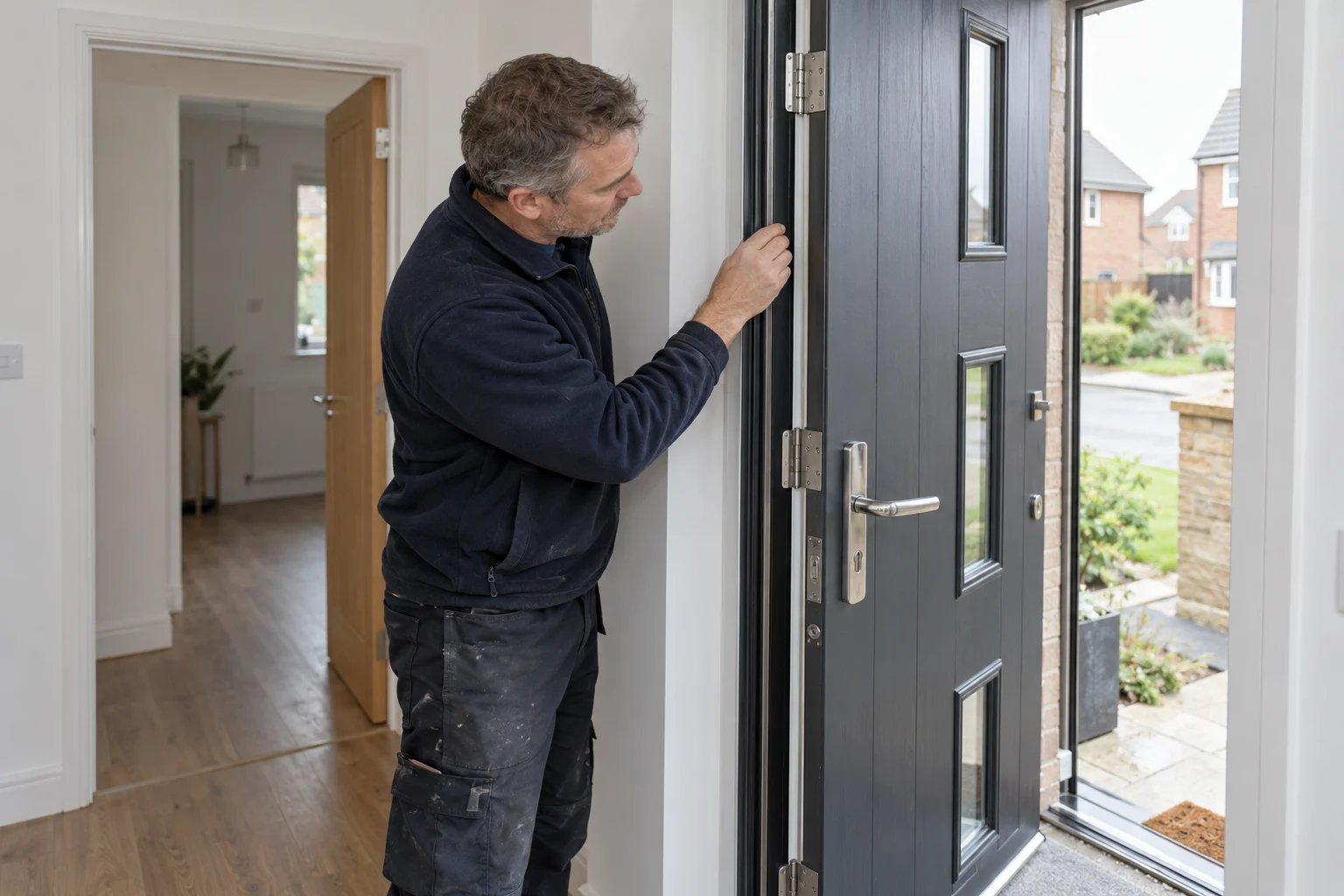
- Check that every door closes smoothly, and the seal touches the frame all the way round.
- Ask the installer to adjust the hinges and keeps, so the door sits tight against its seals.
- Replace any seal that is damaged, stretched or missing.
- Cover letterboxes and keyholes, and check the threshold for gaps.
- Seal the joint between the frame and the wall with a suitable airtightness tape or sealant.
Timing helps too. If a test is done before the final finishes go on, leaks around the frame can be reached and sealed with no fuss. Our guide to new build compliance testing and how to avoid delays shows how early planning saves time and money.
Before we arrive, we also like to have the right details to hand, such as plans and the door and window specifications. You can see the information assessors need from you ahead of the visit.
Once the test is done, you will get a report. We have written about the documentation you receive after an airtightness test, so you know what to expect.
Tight doors are not just about passing a test. They also help to stop draughts and cold spots, which is why airtightness is so important for comfortable living spaces.
FAQs
Should internal doors be open or closed during the test?
Internal doors are normally wedged open, so the air moves evenly through the building. External doors stay closed and locked, so their seals are put under pressure and measured fairly.
Can a door really make a building fail?
Yes. One badly fitted door can leak enough air to spoil an otherwise good result, especially in a small home. The good news is that it is usually one of the easier faults to fix.
Do sliding and bifold doors cause more problems?
They can, because they have longer seals and more moving parts than a standard hinged door. They need careful fitting and adjusting, and are worth checking closely before test day. For more answers, take a look at our air testing FAQs.
When should we check the doors?
As soon as they are fitted and before the final finishes are completed. At that stage, any leaks around the frame can be sealed easily.
Get Your Doors Ready for Airtightness Testing with Ratio Seven
Doors are moving parts in a building that is meant to be sealed, so it is no surprise they often show up as leaks. Worn seals, poor alignment, loose locks and gaps around the frame can all lower your result. Checking and adjusting them early gives you the best chance of passing first time.
If you would like help with your project, talk to Ratio Seven. We will explain what to expect, spot problems before they cost you time, and carry out the test with care. Get in touch today to book your air tightness test.