Understanding the Importance of Air Testing in Construction
In modern construction and environmental management, air testing is a critical process. It not only ensures the energy efficiency of newly constructed buildings but also helps maintain superior indoor air quality standards. By using air testing equipment, professionals in the field can pinpoint areas where air leaks might compromise a building’s intended performance, often leading to energy loss and increased environmental impact.
The Purpose of Air Testing
We conduct air testing for several reasons, the foremost being the detection of leakage points in buildings. These leakage points can be detrimental, causing heat loss, reducing energy efficiency, and potentially increasing utility bills. Especially in the UK, where Building Regulations Compliance is of utmost importance, air testing serves as a vital step to ensure all constructions meet requisite standards.
Types of Equipment Used in Air Testing
For air testing to be effective, specialised equipment is required. Let’s examine some of the primary tools used in this critical task.
Blower Doors
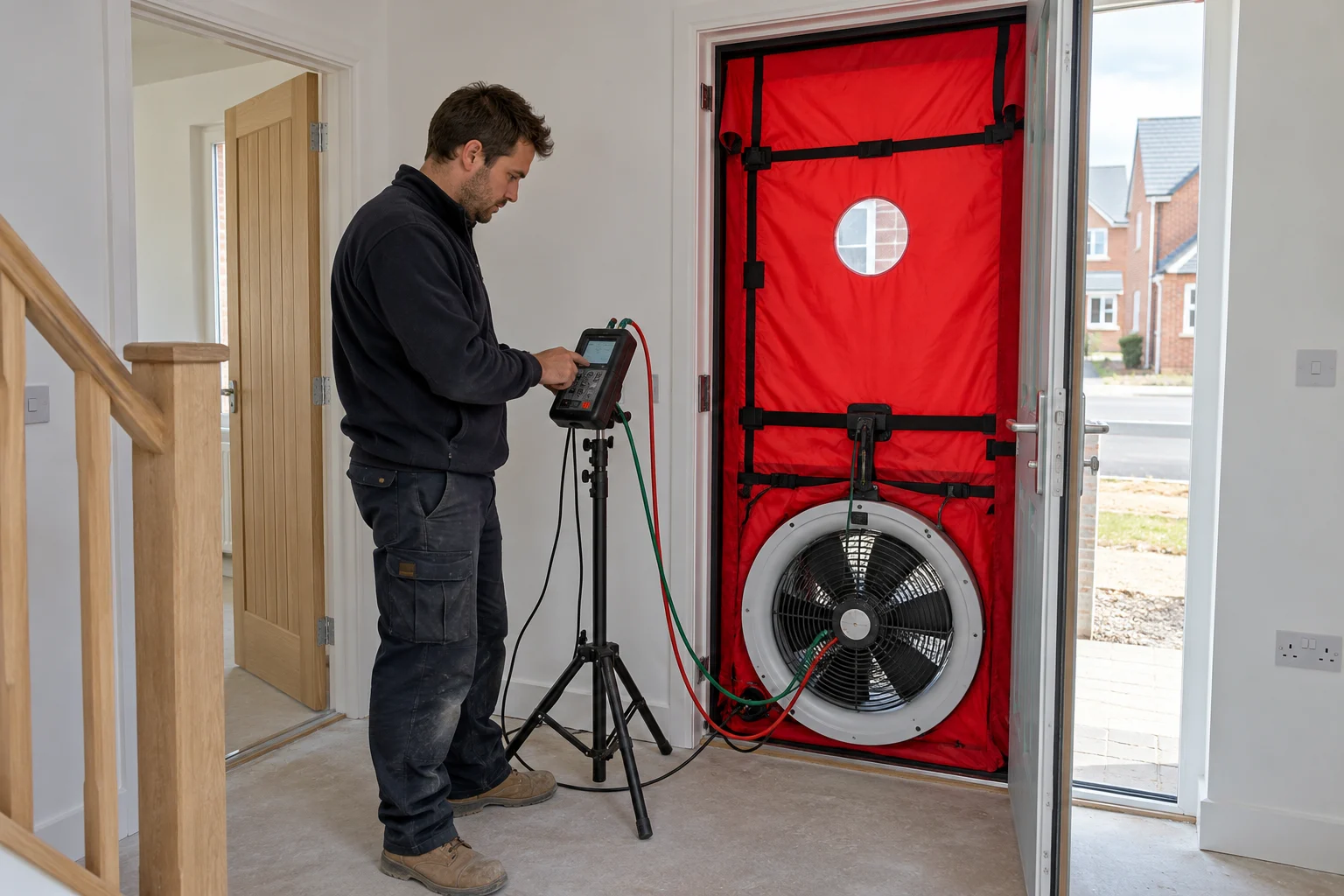
Possibly one of the most commonly recognised tools in air testing, blower doors play a pivotal role by measuring a building’s air-tightness. By creating pressure differences between the inside and outside of a building, blower doors can effectively identify areas of air leakage. These insights help contractors and homeowners understand where improvements are needed to enhance energy efficiency.
Smoke Pens
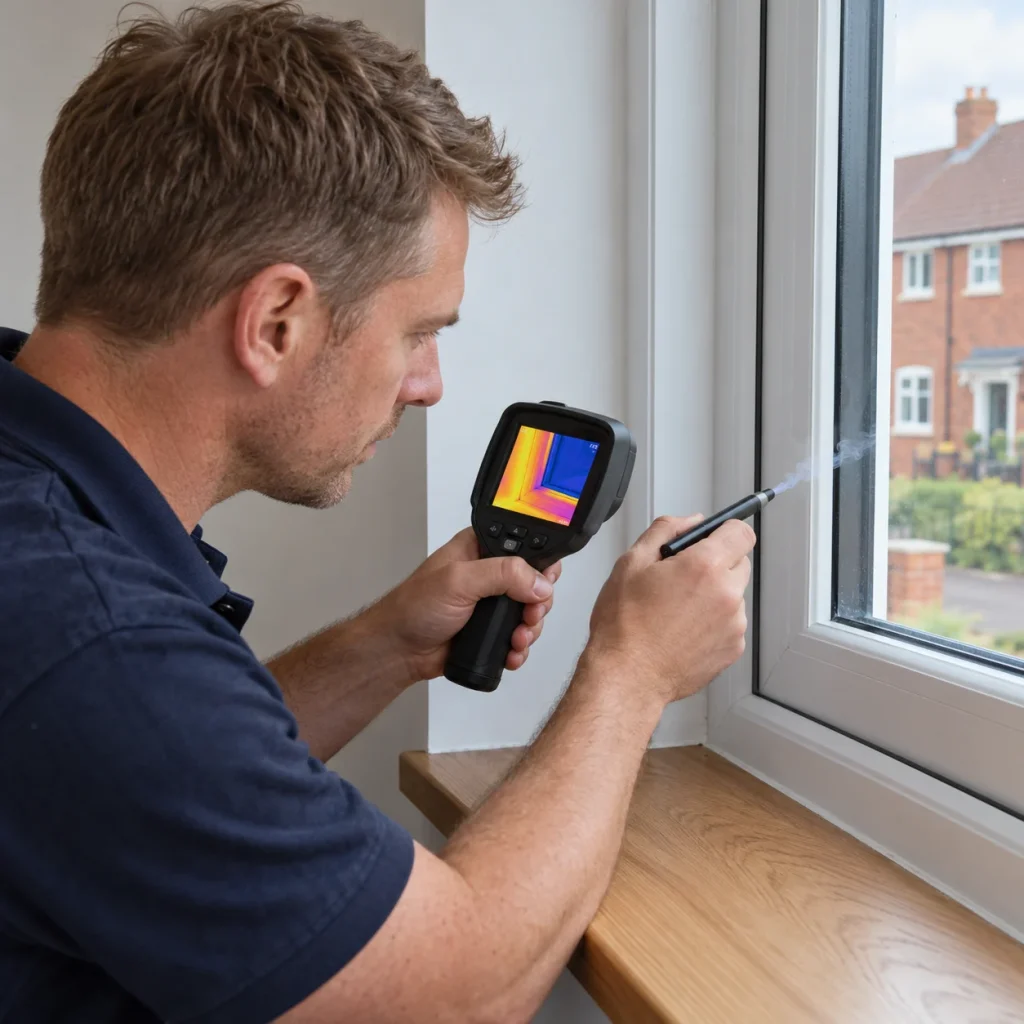
Smoke pens are another valuable tool in the air testing process. These instruments emit a thin stream of smoke that makes airflow patterns visible. When placed near windows, doors, or other potential leakage points, observers can see how the air-driven smoke moves. Smoke pens are particularly useful for small-scale leak detection where visual confirmation is advantageous.
Thermal Imaging Cameras
A more high-tech approach to detecting air leaks involves the use of thermal imaging cameras. These devices capture temperature differences on surfaces, which can indicate air leaks or areas where insulation is lacking. This technology allows technicians to not only identify but also quantify the heat loss occurring due to air leaks. By visualising temperature variances, it becomes easier to plan interventions to mitigate heat loss and improve building energy performance.
Methodology of Air Testing
Conducting an air test involves a structured approach to ensure accurate and reliable results. Here’s how we typically proceed:
- Preparation: Proper preparation of the site is crucial. We must ensure that all windows and exterior doors are closed, ventilation dampers are shut, and fireplaces are sealed.
- Equipment Setup: Setting up the blower door is the next step. This includes mounting the equipment on the external door frame and configuring it to induce pressure differences.
- Conducting the Test: With all controls in place, we can begin the test. The blower door will either pressurise or depressurise the building, and tools like smoke pens and thermal cameras will help spot leaks.
- Interpreting Results: Once data is collected, interpreting the results comes next. Documentation provided post-test includes a comprehensive analysis that aids in determining which areas require sealing or insulation improvements.
Significance of Accurate Measurements
Accurate measurements during air testing are paramount, as they inform the proposed building improvements. By gaining precise data, we can make decisions backed by solid evidence, leading to noteworthy improvements in energy efficiency and compliance. Repeating tests after interventions ensures effectiveness and confirms improvements in sealing leaks.
Energy Efficiency and Environmental Impact
One of the top advantages of air testing is the enhancement of energy efficiency. Leak detection enables the building owner to address areas that contribute to energy wastage, subsequently reducing utility costs and environmental footprints. Participating in regular air testing also promotes adherence to building regulations, which is key for construction projects.
Real-World Applications and Case Studies
Examining past projects shows how effective air testing has propelled enhancements in building performance. From offices to residential properties, implementing comprehensive air testing has yielded measurable energy savings and improved occupant comfort. Case studies of such applications reveal the transformative influence of diligent air testing.
Exploring the Future of Air Testing
As we look to the future, innovations in air testing equipment and methodologies are expected to become more prominent. This progress is anticipated to refine the accuracy of results and foster improvements in building practices. At Ratio Seven, we support ongoing advancements that strengthen the air testing sector, ensuring modern constructions stand out in performance and efficiency.
How Air Testing Helps Build Better, More Energy-Efficient Homes
In the construction industry, air testing is essential for confirming that buildings meet both energy efficiency and regulatory requirements. Thanks to equipment like blower doors, smoke pens, and thermal cameras, we can ensure a building’s integrity is upheld, leading to sustainable energy usage and substantial cost savings. Moreover, as technology advances, air testing will continue to play an integral role in the evolving landscape of construction and environmental management.
Build with Confidence: Book Your Air Test with Ratio Seven
We believe in incorporating air testing as part of our standard operating procedure. Embracing the insights air testing provides allows us to address inefficiencies, boost compliance with Building Regulations, and secure a future oriented towards sustainability in the construction sector. Reach out today to learn how our air testing services can benefit your upcoming projects.