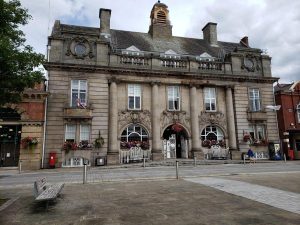
join a small friendly team within an office environment in Nantwich, Cheshire.

An excellent opportunity has arisen for a part-time administrative office assistant to join a small friendly team within an office environment in Nantwich, Cheshire.

Table of Contents

You should have a confident telephone manner and be at ease handling customer enquiries. Experience using MS Word & MS Outlook is essential.

Administrative Office Assistant

Working hours are flexible – Part-time initially with the possibility of moving to full time in the future.

Please send your CV and cover letter to [email protected]

This role would suit the following. Customer Service, Administrator, Office Apprentice, Office Support, Office Assistant, Office Clerk, Sales Administrator, Sales Order Processor, Data Entry Clerk, Receptionist, Admin Assistant.

Commutable from Nantwich, Crewe, Sandbach, Tarporley, Stoke-On-Trent, Newcastle-Under-Lyme, Whitchurch, Alsager, Middlewich, Northwich.
Related Articles you may like

What's the relationship between SAP Calculations and air tightness testing?
What’s the relationship between SAP Calculations and air tightness testing?

The relationship between SAP (Standard Assessment Procedure) calculations and air tightness testing is vital for ensuring that buildings in the UK adhere to energy efficiency standards set by government regulations. SAP calculations evaluate various aspects of a dwelling’s energy profile, including insulation, heating, and ventilation, while air tightness testing specifically measures the uncontrolled airflow through the building’s fabric, which can lead to heat loss and increased energy consumption. Meeting design air permeability targets, often below 10 m³/hr/m², is crucial for achieving compliance with Part L of the building regulations, which require air tightness testing as a mandatory measure. Ultimately, ensuring proper air tightness directly enhances the dwelling’s energy efficiency, reduces carbon emissions, and improves the building’s EPC rating, thus supporting both environmental objectives and regulatory compliance.

Read More »
How does airtightness testing factor into whole-building life cycle assessments?

Airtightness testing, also known as blower door testing, is pivotal in whole-building life cycle assessments, significantly influencing energy efficiency and operational emissions by minimising air leakage and reducing the need for heating and cooling. This testing is essential for Whole Life Carbon Assessments, as it mitigates operational carbon emissions by curbing energy consumption across a building’s lifespan. Furthermore, airtightness enhances indoor air quality and the durability of buildings by controlling moisture levels, thereby preventing mould growth and structural degradation. As airtightness compliance becomes more widespread, it aids in standardising building performance, all while providing valuable data to benchmark and enhance the sustainability of both new and existing structures.

Read More »