Airtightness Testing: Why It’s Key for Builders of New Homes
Delivering new homes to a high standard is no longer just about kerb appeal or timely completion. Meeting building regulations tied to energy efficiency and long-term performance is now essential. One of the most important aspects in this is airtightness testing.
New homes in the UK must be tested for air leakage to prove they meet minimum energy efficiency standards. This is not just a regulatory box to tick. It affects comfort, health, and running costs for future homeowners. Builders who take airtightness seriously are more likely to produce homes that pass initial tests, avoid delays, and earn a solid reputation for quality.
Let’s explore what airtightness testing involves, when and how it is done, and how builders like you can prepare and benefit from getting it right.
Why Airtightness Testing Is Essential for Energy Performance
Air leakage has a direct impact on how much energy is required to keep a home warm. Gaps and cracks in walls, ceilings, floors, windows and around pipework let warm air escape and cold air seep in. The result? A home that’s harder to heat, more expensive to run and less comfortable to live in.
Airtightness testing helps identify how much air is leaking through these unintended gaps in a new build. Less leakage means better control over internal temperatures. A well-sealed home retains more warmth in winter and stays cooler in summer. Pair this with the right ventilation, and you can also improve indoor air quality, removing stale air without compromising heat retention.
From a regulatory perspective, airtightness testing is required under Part L of the Building Regulations. Testing will verify whether the air permeability of a property falls below a predetermined value, usually set during the SAP calculation process. If it doesn’t meet the required standard, the home cannot be signed off.
When Airtightness Testing Happens and What It Involves
The best time to carry out the test is towards the end of the project, once the building envelope has been completed. This means all external doors and windows should be in place, and any penetrations through the building fabric sealed. Waiting until this stage gives you the best chance of achieving a good result on the first attempt.
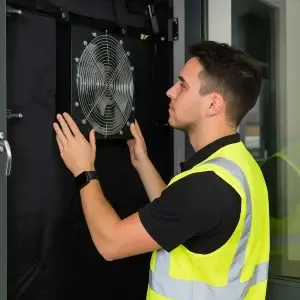
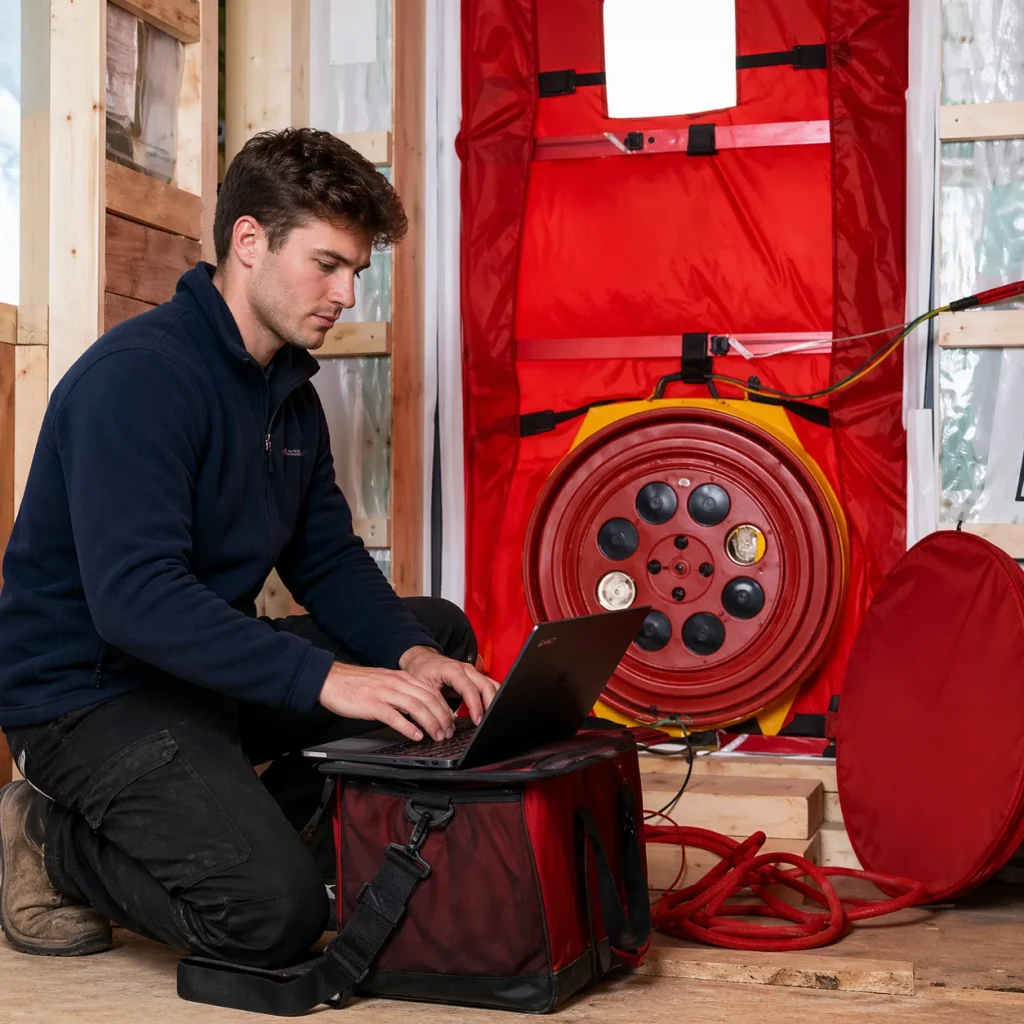
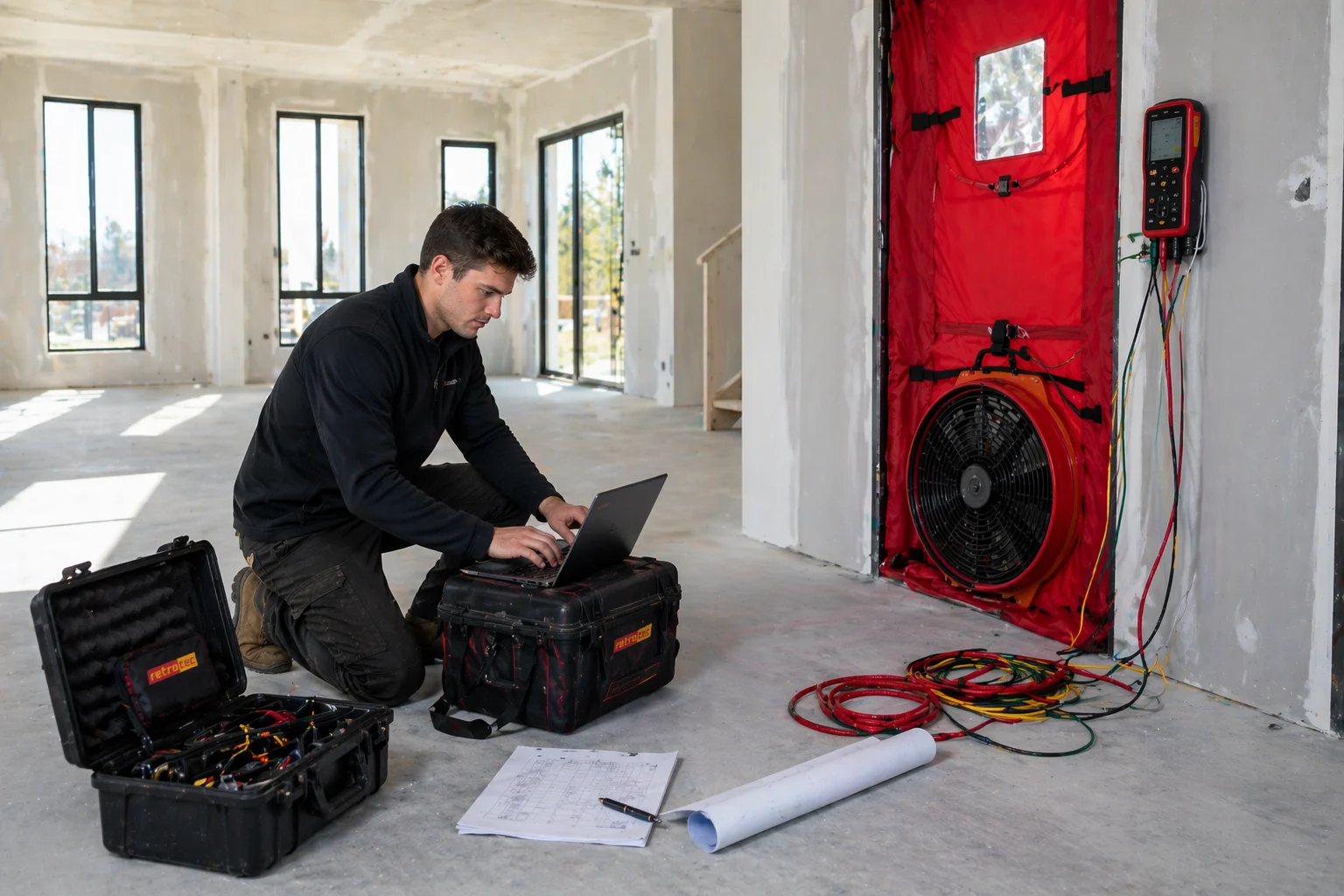
The most common method for testing is using a blower door system. This involves fitting a temporary fan into an external door and then using it to pressurise or depressurise the inside of the home. The equipment measures how much air escapes under pressure. This figure is then compared with the airtightness target from the SAP calculation. The outcome is shown in m³/h.m² at 50 Pascals.
To pass, the measured figure has to meet or be lower than the design target. If the home fails, you’ll need to identify and fix the sources of leakage before re-testing.
Preparing for Airtightness Testing: Builder Tips and Responsibilities
We see it all the time at Ratio Seven: homes that fail the test because airtightness wasn’t considered early enough. The best results are always achieved when air barrier continuity is built into the design and construction process from day one.
Planning for Airtightness
Architects and designers should plan for air barrier layers when drawing up specifications and detailing junctions. Material choices matter too. You’ll need a combination of membranes, sealants, tapes, and careful installation. Everything from floor-to-wall joints to loft hatches must be sealed properly.
Even high-performance materials won’t help if they’re not installed correctly or the continuity of the barrier is broken at service penetrations.
On-Site Good Practice
All trades on site need to be made aware of the airtightness goal. Problems often come from rushed, inconsistent work in hidden places. Think of areas behind bath panels, service risers, electrical boxes, or ceiling voids.
Fixing poor workmanship after the walls are plastered can be costly or impossible without damaging finishes. That’s why quality control during each stage is so important.
Collaborative Working Pays Off
Testing teams, site managers, and subcontractors should all work together. Regular walkthrough inspections during the build can highlight air leakage risks early. We always recommend checking seal integrity at each phase before it becomes inaccessible.
At Ratio Seven, we often support our clients with mid-build advice and airtightness FAQs to tackle any questions before final testing.
Common Problems to Avoid
We often see homes with great insulation values fall short due to minor but critical errors, like:
- Unsealed pipework or cabling through walls and floors
- Gaps behind skirting boards or plasterboard edges
- Loose-fitting loft hatches
- Incomplete sealing around mechanical extract ducts or boiler flues
Spotting these early can save days or weeks in delays and keep the build on track for sign-off.
The Link Between SAP Calculation and Airtightness Performance
The airtightness target for your development is determined during the SAP calculation stage. These calculations estimate the energy use and CO2 emissions of the property based on fabric, heating and ventilation systems, lighting, and airtightness.
A poor airtightness result can have a big impact on the SAP scores, potentially making the home non-compliant with Part L. On the other hand, achieving excellent airtightness allows the assessor to relax other areas of the design to still meet overall targets. For instance, you might not need as much insulation or costly systems if air permeability is below 3 m³/h.m²@50Pa.
This flexibility during design adds up to both improved energy ratings and lower build costs.
Extra Benefits of Preparing for Airtightness Testing
Let’s shift the focus from regulation to reputation. Builders who consistently hit airtightness targets see a range of benefits beyond compliance.
Lower Energy Bills for Homeowners
More airtight homes require less energy for heating and cooling. Over time, this saves money and makes the property more attractive to buyers who care about energy performance and running costs.
Many of our clients report that better airtightness results help their developments appeal more to eco-conscious buyers.
Better EPC Ratings
Improved airtightness dramatically affects the Energy Performance Certificate rating. EPCs rank homes from A to G. If your homes achieve strong airtightness, they are likely to land higher on the scale. That’s good for marketing and helps buyers secure green mortgages, which are rising in popularity across the UK.
It also supports compliance with emerging standards like the Future Homes Standard, which aims for net-zero-ready homes by 2025.
Helping to Cut Carbon and Support Net Zero
Reducing air leakage means less heat loss. Less heat loss means less energy use. And less energy use means a lower carbon footprint. Projects that achieve good airtightness results help contribute towards the UK’s environmental targets and respond to demand for sustainable housing from local authorities and homebuyers alike.
Working With Ratio Seven for Airtightness Testing
We work with developers and builders right across the country, supporting both single-dwelling sites and larger developments. Our airtightness testing service is tailored to ensure your build stays on course for Part L compliance.
We know the stress that can come from testing late in a project, only to be hit with unexpected failure. That’s why we offer continuous site support, early consultations, walkthroughs and reassurance well before the final test is booked.
Whether you are building your first house or managing a multi-unit site, you can speak with us easily through our Contact page.
Airtightness testing is one of the most important aspects of delivering a high-performing, compliant new build. It is about more than just ticking a box. It means creating healthy, comfortable homes that people want to live in.
By planning early, training all subcontractors and aiming for strong results, you’re not only helping to pass first-time tests but also creating lasting value for homeowners. From better EPC ratings to lower energy bills, the benefits are clear. And it starts by paying attention to every small detail that could cause a draft or leakage.
If you’re building to SAP-targeted standards or looking to exceed minimum performance, Ratio Seven is here to help throughout the process. Start by reviewing your air barrier strategy and checking those common trouble spots.
To speak with a trusted testing partner or ask a question about your build, get in touch through our Contact page. Let’s help you pass the test and build homes that perform as well as they look.