What is the relationship between airtightness and condensation risk?
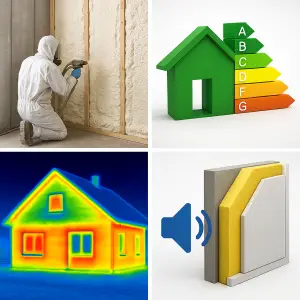
Airtightness in buildings is crucial for controlling condensation and maintaining both structural integrity and occupant health. By preventing air leakage with well-designed air barriers and vapour control layers, the risk of warm, moist air reaching colder surfaces and condensing is significantly reduced, thereby avoiding issues like mould growth and structural deterioration. Airtight buildings also enhance energy efficiency by reducing convective heat loss and contribute to better indoor air quality by keeping out airborne contaminants. Best practices for achieving airtightness include installing continuous airtight and vapour-tight layers on the warm side of the building envelope, particularly in roof systems.